
Flat Roof vs. Gable Roof - Which Is Better in NYC?
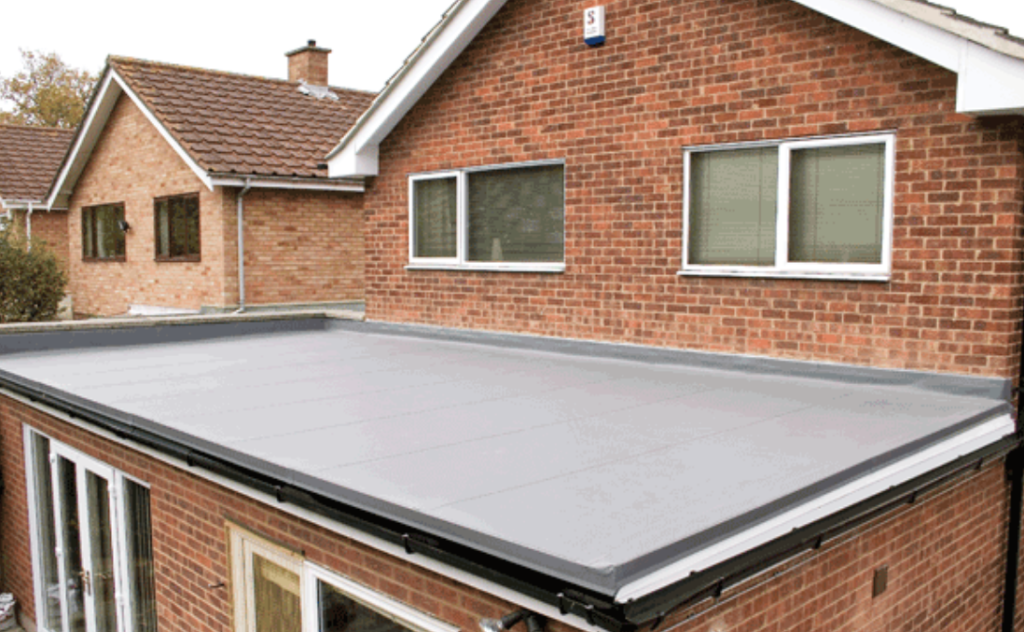
Walk through any Brooklyn neighborhood and you'll see the answer written across the skyline: flat roofs dominate New York City. But does that make them the right choice for every building? And what about homeowners in Staten Island or the outer boroughs with classic pitched homes?
If you're deciding between a flat roof and a gable roof, or just trying to understand what you already have, this guide is for you. We've installed and repaired both types across all five boroughs, and the honest answer is that it depends on your building, your block, and your long-term goals.
First, What's the Difference?
A flat roof, more accurately called a low-slope roof, isn't perfectly horizontal. Building codes require a minimum pitch of about a quarter inch per linear foot to guide water toward drains or scuppers. You'll find flat roofs on brownstones, row houses, mixed-use buildings, and most commercial properties throughout NYC. They rely on a continuous waterproof membrane made of EPDM, TPO, or modified bitumen rather than overlapping shingle materials.
A gable roof is the classic triangular shape most people picture when they think "house." Two sloping sides meet at a central ridge, with triangular walls at each end. It's the standard for detached homes in Staten Island, the Bronx, and suburban parts of Queens. Gable roofs use gravity as their primary drainage system. Water runs down the slope and off the edge, simple as that.
6 Things That Actually Matter
1. Water and Snow Drainage
This is where the two designs differ most, and where NYC's climate makes the biggest difference.
Gable roofs shed water and snow naturally. The steep pitch means rain runs off immediately and snow slides before it can pile up to dangerous weights. There's very little ponding risk, and materials like asphalt shingles are built to work with gravity.
Flat roofs rely entirely on an engineered drainage system: internal drains, scuppers, or gutters. When that system works, it works well. But when a drain gets clogged with debris after a nor'easter, water pools. Water sitting on a flat roof for more than 48 hours speeds up membrane breakdown significantly. In a city where fall leaves and winter ice are facts of life, flat roof drainage needs seasonal attention every single year.
For passive drainage with no system to maintain, the gable roof has the edge. But if you're willing to keep up with the drainage, a flat roof holds its own.
2. Upfront Installation Cost
Flat roofs cost less to install. The surface area is smaller than a comparable pitched roof because there's no slope multiplier, framing is simpler, and labor is faster. In NYC, a flat roof replacement typically runs between $5 and $13 per square foot depending on the material.
Gable roofs involve more complex framing, more materials, and steeper pitches that add labor time and safety requirements. A shingle roof in NYC runs between $4 and $11 per square foot, but the total surface area is larger, and in dense neighborhoods, scaffold and access costs add up quickly.
If you're looking purely at what you pay on day one, flat roofs come out ahead.
3. Long-Term Maintenance
Here's where the numbers shift. Flat roofs need more ongoing attention than most homeowners expect. Inspections every one to two years are standard, drains need seasonal cleaning, and membrane issues like blistering and cracking can develop faster than people realize. A quality flat roof done with EPDM or TPO can last 20 to 30 years, but only with proper upkeep.
Gable roofs, once correctly installed, are comparatively easygoing. Asphalt shingles need periodic inspection but are far less vulnerable to the kind of water-related failures that come from a neglected flat roof. Lifespan runs 20 to 50 years depending on the material.
If you want a roof you can largely leave alone between inspections, a gable roof carries the lower lifetime maintenance burden.
4. Usable Rooftop Space
This is where flat roofs pull ahead in a city like New York, and there's really no contest. A properly waterproofed flat roof can become a rooftop deck, a garden, an outdoor living area, or a platform for solar panels and HVAC equipment. In a city where outdoor square footage is genuinely hard to come by, that is real value. Thousands of Brooklyn and Queens homeowners have turned their flat roofs into something they actually use. A gable roof simply doesn't offer that.
Flat roofs also make it much easier to access and service any mechanical equipment sitting up there, which matters more than people think once they've had to deal with HVAC repairs on a steep pitch.
5. Wind Performance
Gable roofs have a known vulnerability: the large triangular gable ends act like sails in high winds. For a coastal city that takes direct hits from nor'easters and the occasional tropical storm, that's worth taking seriously. A well-braced gable roof can handle it, but it requires proper engineering from the start.
Flat roofs sit low and present a much smaller profile to the wind. That's a big part of why they've become the default for commercial buildings and dense urban neighborhoods.
6. Architectural Fit
In New York City, the building itself usually makes this decision for you. Brownstones, row houses, and attached buildings are almost universally flat-roofed. It's part of their historic design, and anything else would look wrong and likely require structural changes that don't make sense financially. Detached single-family homes in Staten Island, parts of Queens, and the Bronx almost always have pitched roofs, and that matches both the neighborhood character and buyer expectations.
You can technically put a gable roof on a Brooklyn brownstone or a flat roof on a Staten Island colonial, but it's rarely the practical or sensible choice.
Quick Comparison
| Factor | Flat / Low-Slope Roof | Gable Roof |
|---|---|---|
| Upfront cost | Lower | Higher |
| Drainage | Requires active maintenance | Natural, gravity-fed |
| Maintenance frequency | Higher | Lower |
| Lifespan (well-maintained) | 20 to 30 years | 20 to 50 years |
| Wind resistance | Strong | Vulnerable at gable ends |
| Rooftop usability | Excellent | Limited |
| NYC architectural fit | Brownstones, row homes | Detached single-family homes |
So Which One Is Right for You?
For most NYC buildings, brownstones, townhouses, row homes, and mixed-use properties, a flat roof is the right call. Not because it wins every category, but because it fits how NYC buildings are built and how people actually live in them. The ability to use your rooftop for something real is a meaningful advantage in this city. The key is committing to maintaining it properly: clean the drains seasonally, schedule inspections, and deal with small issues before they turn into membrane failures.
For detached single-family homes in Staten Island, the Bronx, and outer Queens, a gable roof with asphalt shingles remains the most practical and cost-effective choice. The passive drainage works in your favor in a wet climate, and the lower maintenance load over time is a genuine benefit.
What neither roof can survive is neglect. A flat roof with blocked drains will deteriorate fast. A gable roof with damaged flashing or missing shingles after a storm leaks just as badly.
Not Sure What Condition Your Roof Is In?
Whether your building has a flat roof or a pitched one, the most valuable thing you can do right now is have it professionally inspected, especially if it's more than 10 years old, has had any leaks, or just came through a hard winter.
Roof On NYC works on both flat and pitched roofs across Brooklyn, Queens, Manhattan, and surrounding areas. Our inspections are free, and we'll give you a straight answer about whether you need a repair, some maintenance, or a full replacement. No pressure, no upsell.
📞 Call or text (929) 720-4223 📧 roofonweb@gmail.com 📍 530 83rd St, Brooklyn, NY 11209
Related reading: